
Purity
99.56%
Batch ID
DXP-TB5-2609
Format
Lyophilised
For research use only
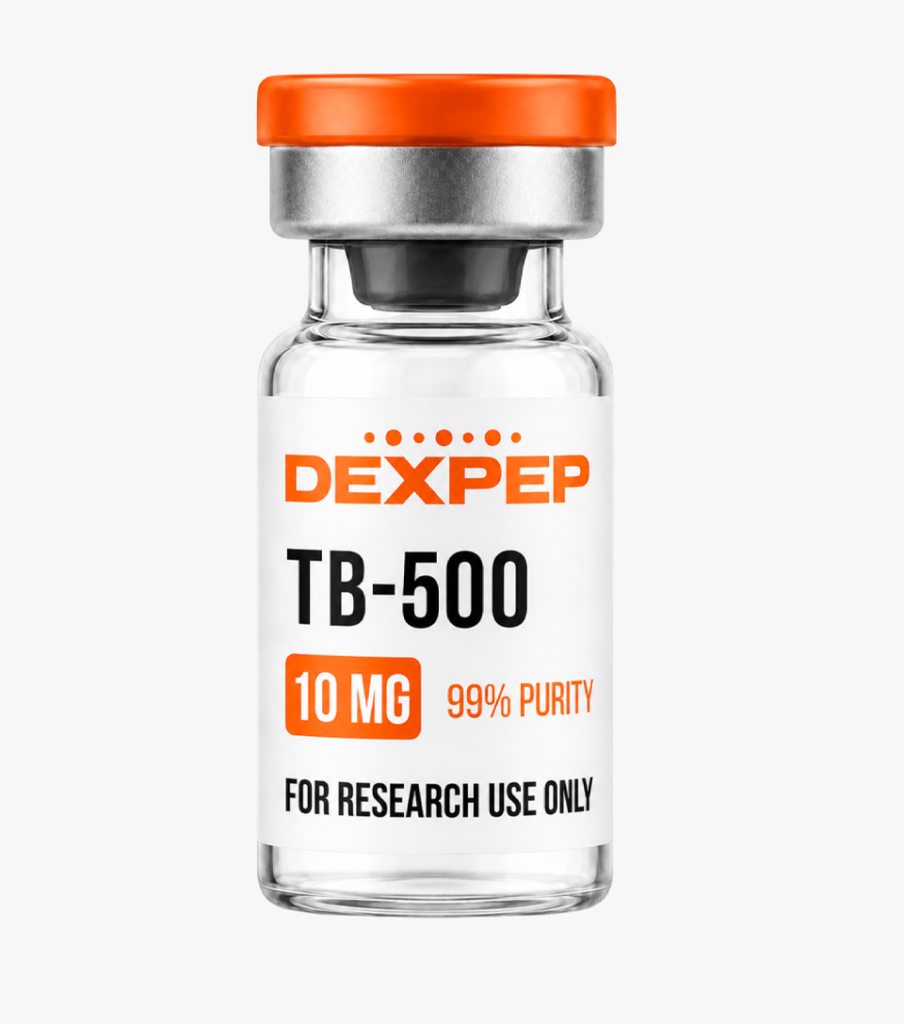
TB-500 10 mg
Small peptide. Broad potential. Supporting a stronger tomorrow.
$265.00
In stock · dispatched today
[custom_bulk_pricing product_id="219"]
5% OFF
Discount Applied
$330.00
→
$313.50
Save $16.50
- Free express post on orders over $100
- Sealed under nitrogen for long-term stability
- Independent HPLC-MS certificate on this batch
◇
Frequently Bought Together
Loading products...
Bundle total
(0 items)
$0.00
What is BPC-157?
TB-500 (Thymosin Beta-4 Fragment) is a synthetic peptide of 43 amino acids derived from the naturally occurring protein Thymosin Beta-4. It mimics the biologically active region of the full protein and is studied for its role in cell migration, tissue repair and regeneration.
Composition
43 amino acids
Molecular formula C₂₁₂H₃₅₀N₅₆O₇₈S · Molecular weight ~4,963 Da. A stable peptide fragment with wide biological interest.
Function
Cell migration & tissue repair
- Promotes cell migration (actin dynamics)
- Supports tissue repair and regeneration
- Helps modulate inflammatory responses
- Supports new blood vessel formation (angiogenesis)
- Supports overall tissue integrity
Promoted uses in research
Widely studied. Broad applications.
- Musculoskeletal injury recovery — muscle, tendon, ligament and joint tissue
- Cardiovascular support — angiogenesis and heart tissue repair
- Neurological repair — nerve regeneration and brain injury recovery
- Soft tissue healing — skin, organs and other soft tissues
The stack
Commonly combined
- BPC-157 — tissue repair & gut health
- GHK-Cu — regeneration & anti-inflammation
- CJC-1295 / Ipamorelin — growth hormone support
- NAD+ — cellular health & recovery
Key research highlights
- Supports cell migration and actin dynamics
- Helps modulate inflammatory responses
- Studied across musculoskeletal and cardiovascular research
- Frequently stacked with BPC-157 and GHK-Cu
TB-500 is the subject of ongoing research. The uses and benefits described are based on preclinical and clinical studies and have not been evaluated by regulatory authorities.